You’ll learn to read subtle body language, use low‑arousal handling, and apply gradual restraint so dogs stay safe and calm. You’ll master bathing, conditioning, drying, brushing, dematting, and breed‑appropriate clipping with proper blades and finishing scissor work dog grooming course malaysia. You’ll also gain nail trimming, ear care, anal gland basics, sanitation protocols, and tool maintenance. Client communication, scheduling policies, and special‑needs grooming for seniors, puppies, and anxious dogs round out the skill set — keep going to uncover practical steps and techniques.

Understanding Canine Behavior and Body Language
When you learn to read a dog’s behavior and body language, you’ll work more safely and groom more effectively; recognizing subtle cues like ear position, tail carriage cosmos pet universe, and muscle tension lets you anticipate stress before it escal. You’ll observe eye contact patterns to judge comfort: soft, intermittent gazes show ease, while fixed staring can signal fear or challenge. Tail signals are equally informative — a low, tucked tail indicates anxiety, a slow wag with loose hips suggests relaxation, and a high, stiff tail warns of arousal. You’ll monitor posture, lip tension, and yawning as cumulative indicators rather than isolated facts. Mastering these signals gives you confidence and freedom to make calm, timely choices that protect both you and the dog.
Safe Handling and Restraint Techniques
Reading a dog’s signals gives you information you can act on while you prepare to handle and restrain them safely; instead of reacting to a sudden snap or bolt, you’ll already be positioning yourself and choosing techniques that keep stress low. You’ll apply calm, predictable movements, prioritizing body positioning to limit escape routes and reduce strain on joints. Use brief, clear cues and support the dog’s weight when lifting or turning. Introduce restraint gradually, combining leash control with gentle hands-on anchoring so the dog learns predictable limits. Practice muzzle introduction as a positive, stepwise routine—offer treats, let the dog investigate, then fit briefly before rewarding. You’ll always monitor breathing and circulation and release promptly when the dog relaxes.
Bathing, Conditioning, and Drying Methods
In a calm, methodical routine you’ll prepare the bathing area, choose products suited to the dog’s coat and skin, and plan each step—wetting, shampooing, conditioning, rinsing, and drying—to protect skin health and coat structure. You’ll monitor water temperature to avoid irritation, using lukewarm settings for most dogs and adjusting for breed or condition. Your product selection should prioritize pH-balanced shampoos and targeted conditioners; apply conditioner only where needed to maintain elasticity and sheen. For coat prep, remove loose debris and check skin for lesions before wetting. Rinse thoroughly to remove all residue, then control excess moisture by towel blotting. For final drying, use low-heat blow drying with distance and movement to prevent hotspots and to smooth the coat efficiently.
Brushing, Dematting, and Coat Maintenance
After bathing and drying, you’ll move on to brushing and dematting to maintain coat health and prevent future tangles. You’ll choose tools by coat type—slicker brushes for fine undercoats, wide-tooth combs for curly hair—and work methodically from tips to roots to avoid breakage. For mats, you’ll isolate the area, hold the skin taut to protect it, and use dematting tools or blunt scissors only when necessary. Regular brushing supports skin health by distributing natural oils and reducing trapped debris. You’ll schedule sessions to match seasonal shedding cycles, increasing frequency during heavy shed to prevent loose hair buildup. Teach owners simple home routines to preserve results and empower them to keep their dog comfortable, tidy, and free-moving between professional visits.
Breed-Specific Haircuts and Clipper Skills
When you move into breed-specific haircuts and clipper skills, you’ll focus on silhouette, coat texture, and functional needs to achieve the correct finished look while keeping the dog comfortable and safe. You’ll study breed patterns so each cut respects traditional lines and the animal’s anatomy, balancing style with mobility. Learn to assess coat type quickly, select appropriate blades, and sequence work to minimize stress. Prioritize clipper ergonomics: maintain neutral wrist position, rotate tasks, and use quiet, well-balanced tools to extend your career and reduce canine anxiety. You’ll practice safe restraint, blending clipper work into grooming plans, and recognizing when to hand off complex cases. This approach keeps freedom of expression grounded in technique and care.
Scissor Techniques and Finishing Touches
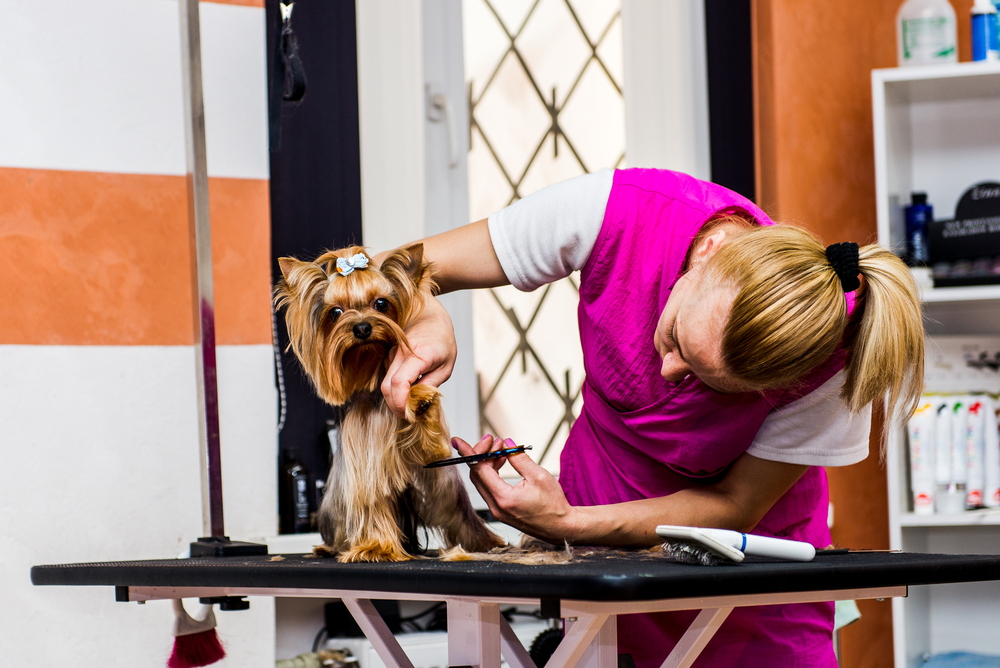
Move from clipper work to scissor techniques by focusing on shaping, blending, and the final lines that define a groomed silhouette. You’ll refine contours with controlled, confident cuts, creating balance and movement. Pay attention to scissor textures to add softness or structure where the breed and owner’s lifestyle allow. Finish strategically to preserve freedom of expression in style while maintaining functional grooming.
- Use point-cutting and slide-cutting to blend clipper lines and soften edges, keeping proportions natural.
- Create facial and paw lines with small shears, working symmetrically and checking from multiple angles.
- Apply finishing sprays sparingly to set hair and enhance texture, then reassess for final adjustments before release.
Nail Trimming, Ear Care, and Anal Gland Management
Although these tasks may seem routine, mastering nail trimming, ear care, and anal gland management is essential for your clients’ comfort and overall health. You’ll learn to assess nail length relative to paw pads, trim without nicking the quick, and file edges for smooth contact. In ear care, you’ll identify normal anatomy, remove visible debris gently, and choose appropriate cleaning solutions based on ear type and dermatologic signs. For anal gland management, you’ll recognize signs of impaction, communicate indications for professional gland expression or veterinary referral, and perform manual techniques safely when trained. You’ll also counsel owners on at-home maintenance and monitoring, empowering them to prevent recurrence while respecting each dog’s behavioral and physical boundaries.
Sanitation, Infection Control, and Tool Maintenance
After mastering nail, ear, and anal gland care you’ll need to make sanitation, infection control, and tool maintenance part of every appointment to protect animals, staff, and clients. You’ll establish protocols that limit cross-contamination, use EPA-registered disinfectants, and follow strict biohazard disposal for contaminated materials. Maintain sharp, clean tools and document sterilization cycles so you can work confidently and independently.
- Clean & disinfect: wipe, soak, autoclave when needed, and replace tools per wear.
- Facility controls: keep ventilation systems functional, control humidity, and schedule deep cleans.
- Personal & record practices: use PPE, isolate sick animals, log incidents, and train staff on infection response.
These measures keep your workspace safe, compliant, and freeing — letting you focus on excellent grooming.
Client Communication and Business Etiquette
Set clear appointment policies — including booking, cancellation, and no-show rules — and communicate them upfront so clients know what to expect. Stay professional in all exchanges while using empathetic language to acknowledge owners’ concerns and build trust. You’ll protect your schedule and reputation by enforcing policies consistently and responding to clients with patience and clarity.
Clear Appointment Policies
When you establish clear appointment policies, you reduce no-shows, protect your schedule, and set professional expectations with clients from the first contact. You’ll outline cancellation windows and payment policies so clients understand commitments and consequences without surprise. Be concise, firm, and fair: freedom-friendly clients appreciate straightforward rules that let them plan confidently.
- Specify cancellation windows — how much notice you require and any fees — so both parties can manage time and openings.
- State payment policies clearly: deposits, accepted methods, and when balances are due to secure bookings and reduce last-minute issues.
- Detail rescheduling rules and holds for recurring clients to preserve flexibility while protecting your income and time.
Consistent, posted policies build trust and streamline day-to-day operations.
Professional, Empathetic Communication
Because building trust starts at first contact, communicate with clients in a way that’s both professional and empathetic: listen actively, mirror their concerns, and respond with clear, respectful information that addresses their needs. You’ll use empathetic listening to understand pets’ histories and owners’ expectations, then apply tone mirroring to match emotional cues without losing authority. Keep messages concise, set realistic timelines, and explain procedures and costs in plain language so clients feel informed and liberated to choose. Maintain boundaries: be friendly but firm about safety and policy. Follow up after appointments, document conversations, and invite feedback. Consistent, considerate communication reduces misunderstandings, strengthens client loyalty, and lets you run a confident, freedom-focused grooming practice.
Grooming for Special Needs: Seniors, Puppies, and Anxious Dogs
When you groom special-needs dogs, you’ll modify your workspace and handling to support senior mobility and reduce strain. You’ll use slow, gentle desensitization techniques with puppies to build positive associations and safe handling. For anxious dogs, you’ll apply calming cues, predictable routines, and low-stress restraint to keep both dog and groomer safe.
Handling Senior Mobility
Although senior dogs may move more slowly and stiffen unpredictably, you can still groom them safely and comfortably by adjusting your approach to their limited mobility. You’ll honor their dignity and freedom by minimizing handling time, using calm cues, and positioning them where they feel secure. Incorporate adaptive harnesses and make certain good floor traction to prevent slips.
- Use low tables or raised platforms with non-slip surfaces so the dog can step up or you can work at a comfortable height.
- Employ short, frequent sessions — this preserves energy and reduces strain for both of you.
- Support limbs gently during clipping or nail care, watching for signs of pain and stopping if the dog resists.
These techniques keep grooming efficient, respectful, and safe.
Gentle Puppy Desensitization
Introducing puppies to grooming with calm, incremental steps sets the stage for a lifetime of cooperative care. You’ll use treat based desensitization to create positive associations: pair each tool, sound, or motion with a high-value reward so the pup chooses the experience. Implement gradual touch training by breaking handling into micro-steps—paws, ears, muzzle—progressing only when the puppy remains relaxed. Keep sessions short, predictable, and voluntary so the dog retains autonomy and trust. Record baseline reactions and adjust pace; some puppies need more repetitions, others fewer. Reinforce relaxed behavior with praise and rewards, then fade treats to maintain compliance. Your consistent, precise approach builds confident dogs who’ll meet grooming as freedom, not fear.
Calming Anxious Dogs
Because anxious dogs process grooming as a potential threat, you’ll need a deliberate, low-arousal plan that prioritizes predictability, control, and gradual exposure. You’ll assess triggers, set short sessions, and use calming pheromones and clear signals so the dog feels safe and can choose to cooperate. Positioning, barrier options, and timed breaks give you control without force.
- Use calming pheromones, soft voice, and sheltering touches to lower arousal before handling.
- Apply massage techniques—slow, rhythmic strokes—to release tension and build trust during grooming steps.
- Progress by increments: touch, comb, brief clip, rewarding choices; never rush consent.
You’ll keep records, adjust pace per dog, and aim to preserve each animal’s autonomy and dignity.
Conclusion
You’ve now covered the core skills every groomer needs: reading canine behavior, safe handling, bathing and drying, coat maintenance, precision clipping, basic medical care, sanitation, and clear client communication. Keep honing techniques for seniors, puppies, and anxious dogs, and maintain rigorous hygiene and tool care. Staying curious, practicing regularly, and investing in continued education will boost your confidence, protect pets’ well‑being, and build a professional reputation that clients can trust.
